
The Right Online Business Strategy Matters
What This Image Is Really Saying
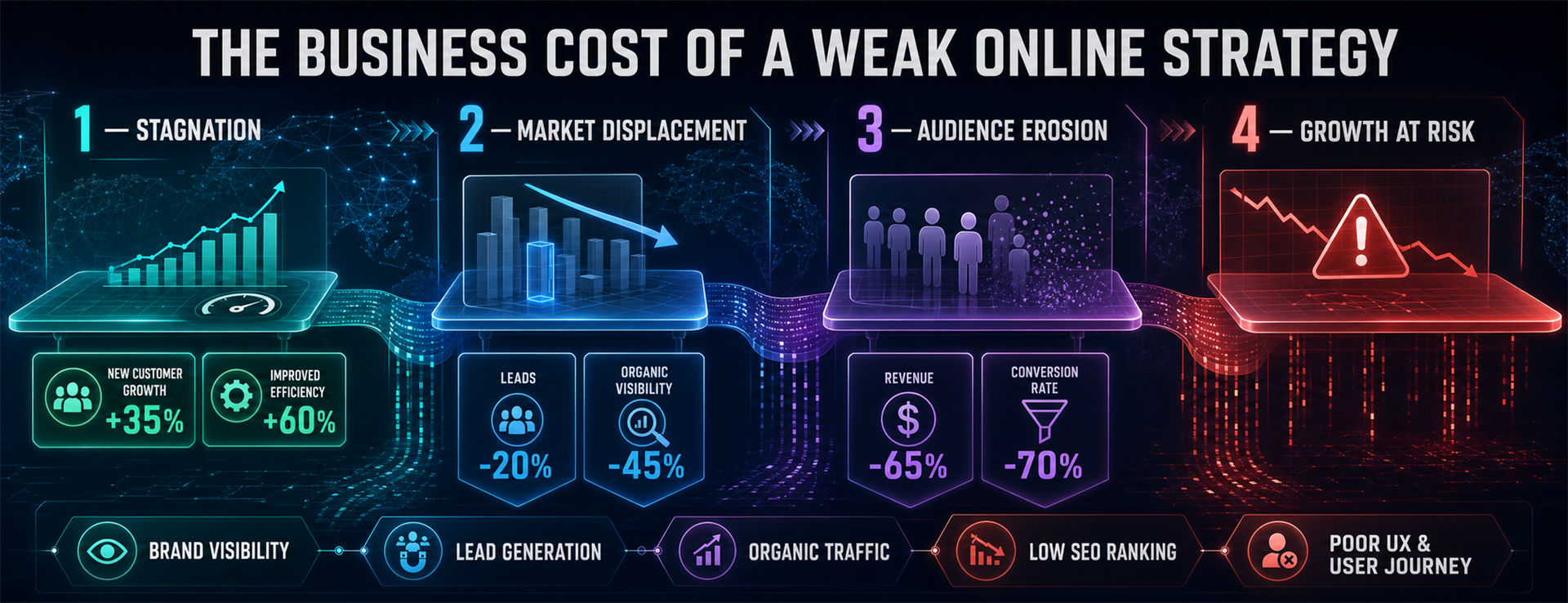
Imagine you own a lemonade stand, but instead of it being on a street corner, it's on the internet. If you don't take care of your online lemonade stand the right way, bad things start happening one after another — kind of like dominoes falling. This image shows four stages of what happens to a business when they don't have a good online strategy, and it starts from "not so bad" and gets worse and worse.
- Stage 1 is called "Stagnation." This means the business isn't growing anymore. It's like riding a bike but not pedaling — you're just coasting until you eventually stop moving forward.
- Stage 2 is called "Market Displacement." This means other businesses (your competitors) start taking your customers away because they're doing a better job online than you are.
- Stage 3 is called "Audience Erosion." This means the people who used to like your business start disappearing, kind of like sand washing away from a sandcastle when the waves keep hitting it.
- Stage 4 is called "Growth at Risk." This is the scariest stage because now the whole business is in danger of shrinking or even failing completely.
Why Does This Happen?
At the bottom of the image, there are five important ingredients every business needs online. Think of these like ingredients in a recipe — if you leave one out, the whole recipe can fail:
- Brand Visibility — This means people actually being able to find you and recognize you online, like a store having a big, bright sign.
- Lead Generation — This means turning curious visitors into people who might actually want to buy something from you.
- Organic Traffic — This means people finding your website naturally through search engines like Google, without you having to pay for ads.
- Low SEO Ranking — SEO stands for "Search Engine Optimization." If your ranking is low, it means your website shows up way at the bottom of Google search results, where almost nobody looks.
- Poor UX & User Journey — UX stands for "User Experience." This means how easy or hard it is for someone to use your website. If it's confusing or slow, people leave and never come back.
How to Build the Right Strategy (In the Correct Order)
To avoid falling into these four bad stages, a business needs to build its online strategy like building a house — you have to do things in the right order, or the whole thing could fall apart.
- Step 1: Start with a strong, user-friendly website (fixing the UX & User Journey). Just like you wouldn't build a house on a shaky foundation, you can't build an online strategy on a website that's confusing, slow, or hard to use. This step comes first because everything else depends on it.
- Step 2: Improve your SEO so people can actually find you (fixing Low SEO Ranking). Once your website is solid, you need to make sure Google and other search engines can find it and show it to people who are searching for what you offer. This is like putting a great sign outside your lemonade stand so people walking by actually notice it.
- Step 3: Drive organic traffic to your site (building Organic Traffic). With good SEO in place, more people will start naturally visiting your website without you having to pay for ads every single time. This is like word spreading around the neighborhood that your lemonade stand is the best one.
- Step 4: Turn visitors into leads (building Lead Generation). Now that people are visiting your site, you need a way to turn them from just "visitors" into people who are interested in buying, signing up, or contacting you. This might be things like a contact form, a newsletter sign-up, or a special offer.
- Step 5: Build strong brand visibility (Brand Visibility). Finally, once all the pieces above are working together, your brand becomes something people recognize and trust — almost like becoming the neighborhood's most famous lemonade stand that everyone talks about.
Why the Order Matters
If a business skips steps or does them in the wrong order, it's kind of like trying to decorate a house before you've even built the walls. For example, if you try to build brand visibility before fixing your website's user experience, people will find your brand, click on your website, get frustrated, and leave — which actually hurts your reputation instead of helping it. That's exactly how businesses end up sliding into Stagnation, then Market Displacement, then Audience Erosion, and finally Growth at Risk — the four stages shown in the image.
By doing things in the right order — fixing the website first, then SEO, then traffic, then leads, then brand — a business builds a strong, lasting online presence instead of a shaky one that could collapse under pressure from competitors.